Every year, the holy month of Ramadan reshapes the rhythm of more than two billion people — not only in the spiritual sphere, but also in how they consume, communicate, negotiate, and build communities. For an external observer or a foreign partner, it may appear to be simply a period of fasting for Muslims. In reality, it is one of the most powerful social and economic phenomena of the modern world, with tangible business implications and cultural and regional differences that anyone engaging with the Middle East and North Africa should understand.
Why Ramadan Begins on Different Dates in Different Countries
The Islamic calendar is lunar. Each month begins with the sighting of the new crescent — the thin sliver of the moon visible after sunset. For this reason, the start date of Ramadan shifts each year by approximately 10–11 days relative to the Gregorian calendar and is never identical to the previous year.
However, the key question is not when the crescent appears, but who saw it — and where. This is where differences between countries emerge.
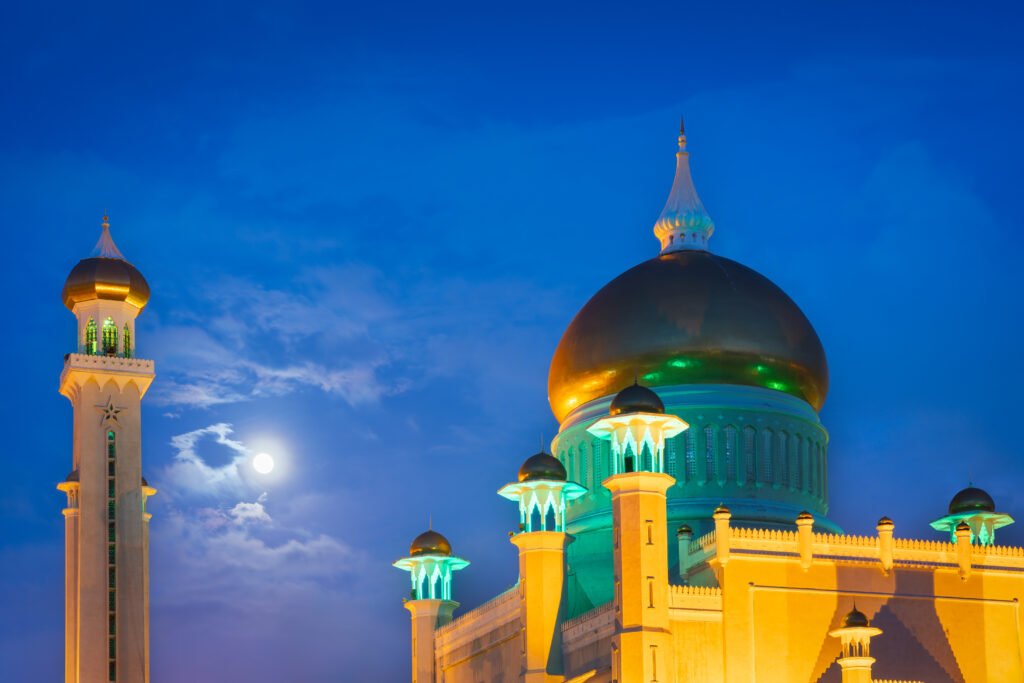
In most Muslim-majority countries, it is traditionally held that a new month begins only after the physical sighting of the crescent with the naked eye. According to a hadith, the Prophet Muhammad instructed: “Begin fasting when you see the moon and end fasting when you see the moon.” Yet the new moon is not in the same phase at the same moment across the globe, so the start date of Ramadan depends on which sightings are officially recognized in a given location.
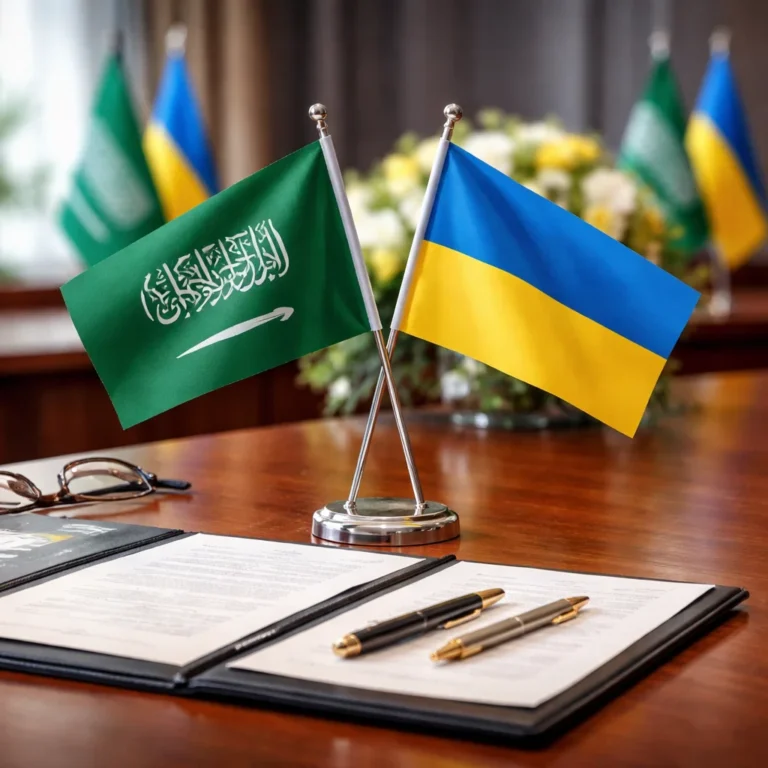
This is not merely a technical distinction — it reflects a theological debate that has lasted for centuries, as well as a certain geopolitical logic. The United Arab Emirates, Qatar, and Palestine traditionally follow Saudi Arabia in determining the date, while Egypt, Türkiye, Jordan, Syria, and Oman often announce the start of Ramadan a day later — if the crescent is not visible.
This is not just a technical difference - it is based on centuries-old theological debate and a certain geopolitical logic. The UAE, Qatar and Palestine traditionally follow Saudi Arabia in setting the date, while Egypt, Turkey, Jordan, Syria and Oman often declare the start of Ramadan a day later - if the crescent has not been sighted.
In Ramadan 2026, Saudi Arabia and the United Arab Emirates begin fasting on 17 February, while Egypt, Türkiye, Morocco, and most countries in Asia and Africa begin on 19 February.
More Than Fasting: The Social Logic of Ramadan
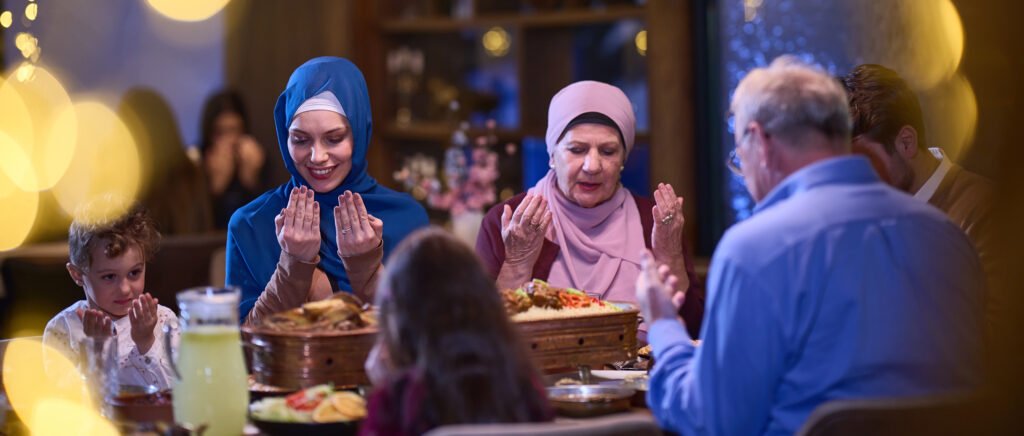
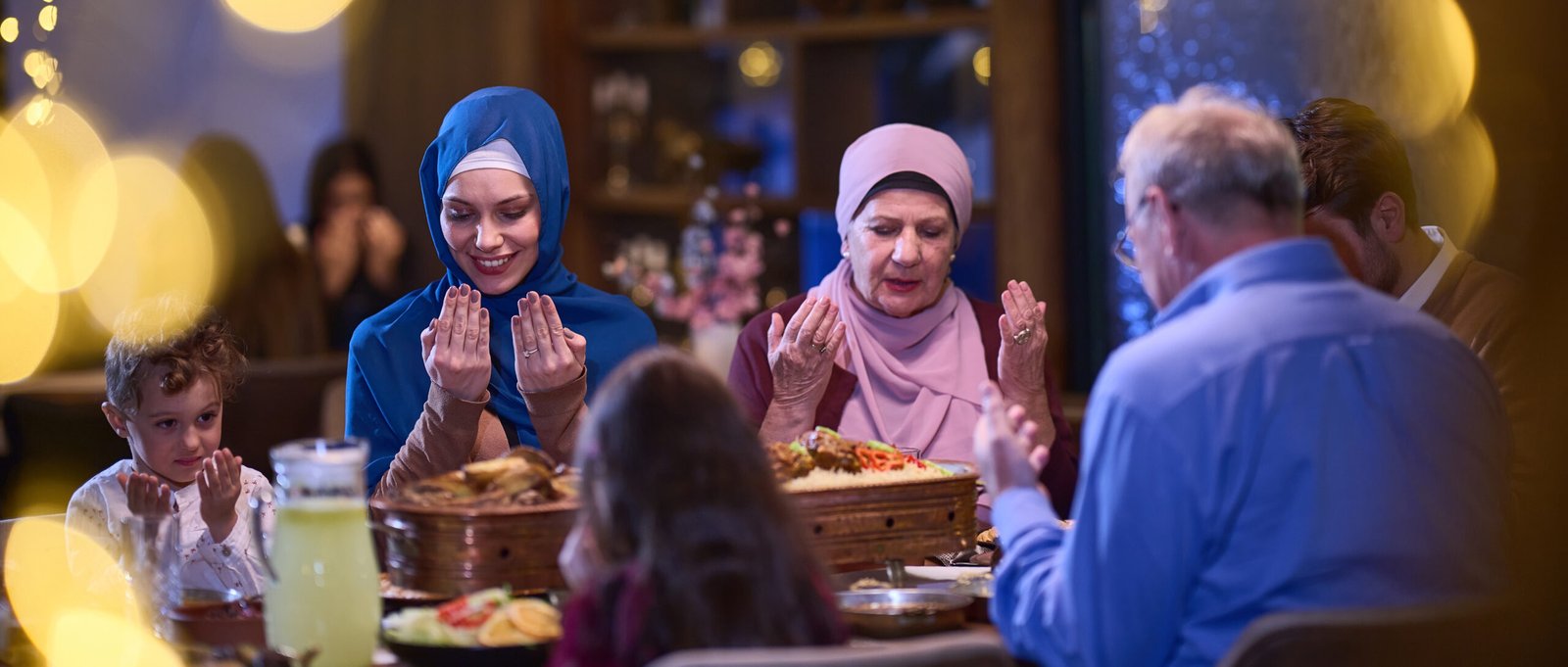
Ramadan is a month of annual renewal of social bonds. Families gather for iftar (the evening meal after sunset), mosques are filled, and charitable giving reaches its peak. According to YouGov Ramadan 2026, 78% of adults in Saudi Arabia and 74% in the United Arab Emirates plan to devote more time to religious and spiritual practices; 68% in the UAE and 63% in Saudi Arabia plan to spend more time with family.
This is not a retreat from public life but its reconfiguration. Evenings become more active than weekdays, the night-time economy flourishes, and the daytime rhythm slows. For business, this means that habitual models of interaction with clients and partners simply stop working.
Business Culture During Ramadan: What You Need to Know
Working Hours and the Pace of Negotiations
In most countries in the region, official working hours are reduced during Ramadan — typically by two to three hours. In the United Arab Emirates, Qatar, and Saudi Arabia, labor legislation obliges employers to shorten the working week for Muslims. Despite reduced hours, merchants may experience higher profitability due to increased demand — although some Saudi companies have reported productivity declines of 35–50%.
In practice, business meetings start later, extend into the afternoon less frequently, and decisions requiring several rounds of discussion are better not scheduled for the first week of Ramadan. A slower pace should not be mistaken for disinterest — a fasting partner may be focused, but physically fatigued until sunset. Demonstrating understanding of this is already part of business etiquette.
Iftar as a Business Instrument
An invitation to iftar is not merely a courtesy. It is one of the most powerful networking tools in the region. Sharing an evening meal after sunset removes formal barriers, signals respect for a partner’s cultural context, and builds trust that no official presentation can replace.
If you are invited: arrive on time (the meal begins immediately after the sunset adhan), do not refuse food without serious reason, and avoid initiating business discussions immediately — allow your counterpart time to eat and recover. If you are hosting partners for iftar, be prepared to spend two to three hours at the table.
If you are a foreign partner and not fasting, eat and drink discreetly: not in public places in front of those who are fasting, and do not display food in office spaces during the day.
Ramadan and the Markets: Where the Money Concentrates
E-Commerce, Advertising, and the Night-Time Economy
Recent data consistently confirms one point: Ramadan is the hottest commercial season in MENA. According to AppsFlyerin Saudi Arabia alone, consumer spending during the week before Ramadan 2025 reached $4.6 billion — one-third more than the previous week. E-commerce in the Gulf countries during Ramadan grows by 30–50% compared to ordinary months; in Saudi Arabia, transaction volume increases by 35–40%. According to analysts' forecasts MEmob+, Ramadan 2026 has become the most mobile-oriented and digitally active in the entire history of observations - over 90% e-commerce transactions are carried out from mobile devices.
Peak consumer activity occurs between 20:00 and 3:00 after iftar. It is during these windows that purchases become more impulsive and emotionally driven rather than planned daytime acquisitions. Scheduling push notifications and flash sales during daytime hours means speaking into a void.
What Is Bought — and Where
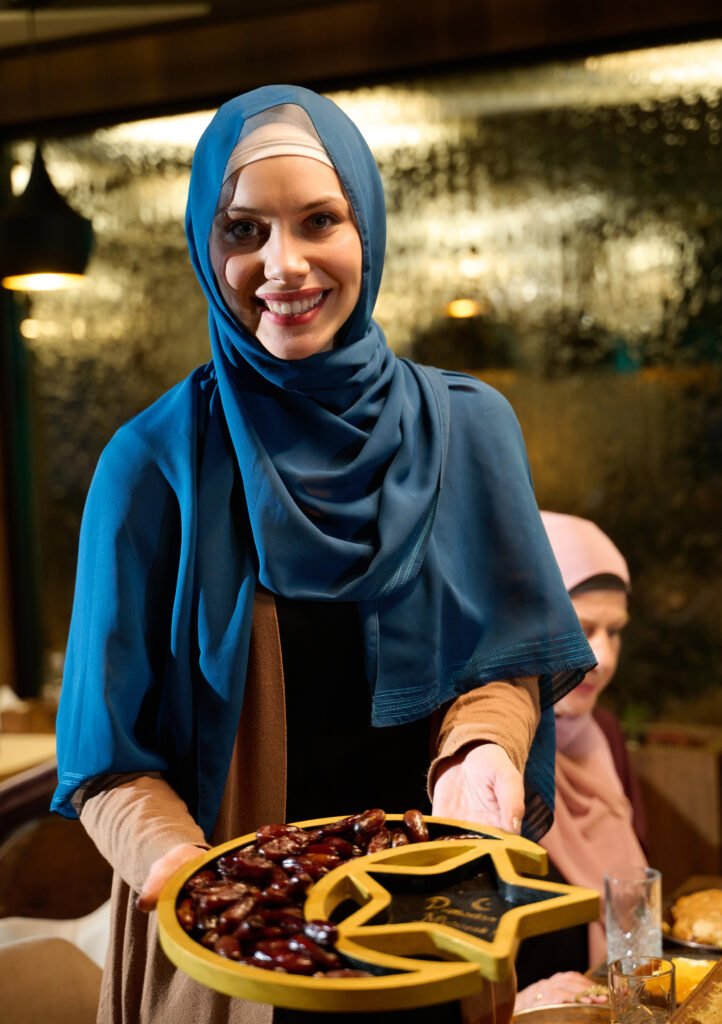
According to YouGov, 55% of consumers in the UAE and 58% in Saudi Arabia increase spending on groceries and daily goods. Food delivery rises: 41% of UAE residents and 33% in Saudi Arabia increase spending on ordering iftar at home. Eighty-six percent of MENA consumers consider Ramadan the best time for discounts, and retail sales across the region during the month reach $66 billion.
For retail and hospitality, Ramadan is the peak season: Gulf hotels offer special iftar tents, restaurants are booked weeks in advance, and food courts in Dubai or Doha transform into evening bazaars after sunset.
Regional Overview: From the Gulf to Morocco — Different Traditions, Different Dynamics
Understanding Ramadan in the region is impossible without recognizing how differently it is experienced across countries. This applies to social practices, business rhythms, and public behavior alike.
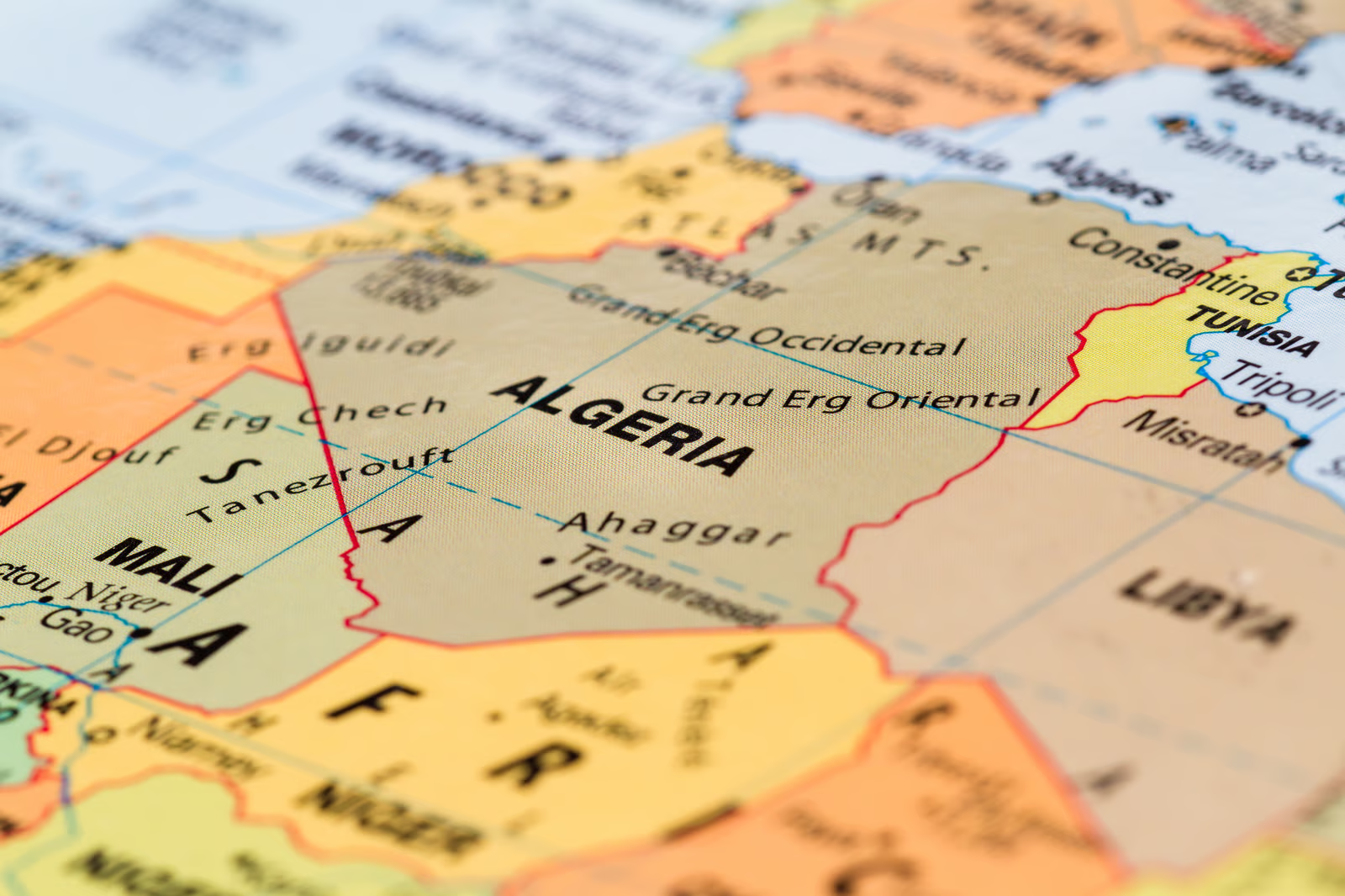
Gulf countries (UAE, Saudi Arabia, Qatar) have the most commercialized Ramadan in the region. Large iftar tents at five-star hotels, extensive advertising campaigns, and active night-time street trade. Formally, the working rhythm is reduced, but post-sunset business activity more than compensates. The UAE, with its large expatriate communities, maintains relative tolerance toward non-Muslim food consumption — but only if it occurs without public display.
Levant (Lebanon, Jordan) — experiences a more intimate, family-oriented Ramadan. Iftar tables in Beirut combine cuisine from different regions of the Arab world, and it is not unusual for Muslims and Christians to sit at the same table. Business activity slows more significantly than in the Gulf, particularly in the public sector.
Egypt and Morocco — here Ramadan is primarily a mass social experience. Egyptians decorate the streets with lanterns favanues, night markets and puppet shows are part of a living cultural tradition. In Morocco, the first course of iftar is harira — a lentil and chickpea soup, the recipe of which has not changed for centuries. In some Muslim countries, public consumption of food during the day during Ramadan is an administrative offense; the sale of alcohol is prohibited in Egypt; in Kuwait, Saudi Arabia and Morocco, eating and smoking in public is a fine or imprisonment.
Turkey — a formally a secular state with significant cultural influence of religion. Ramadan is observed as a broad social event, not solely a religious practice. Business continues to operate in its usual mode — Turkish labor law does not provide for reduced working hours — but brand marketing and social initiatives clearly adjust to the season.
Ramadan in Ukraine: The Crimean Tatar Tradition
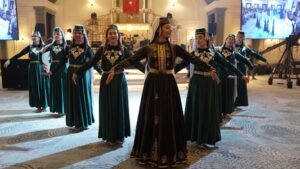
The Crimean Tatars are an indigenous Muslim people deported by Stalin in 1944 from their native Crimea to Central Asia. During the Soviet period, open religious life was impossible for them. Yet Ramadan survived — not as a public practice, but as an identity preserved in private space. According to Dilyaver Saidakhmetov, a leader of an Islamic organization in Ukraine, Crimean Tatars fasted “almost as something entirely separate from religion” — as a way of remaining themselves.
Traditional iftar dishes — yantyk and cheburek — are associated not only with cuisine, but also with the memory of returning from deportation: flour, water, and a little filling were all that families had.
After the Russian Federation occupied Crimea in 2014 and launched a full-scale invasion in 2022, the community found itself scattered again — this time throughout Ukraine and beyond. Supreme Mufti of Crimea Ayder Rustemov has noted that mosque attendance in Kyiv increased after 2022: “People need spiritual support.” On the occupied peninsula, the situation is the opposite: mosques are monitored by security services, and Crimean Tatar activists face arrests under “religious” charges. In the USSR, the practice of Ramadan was officially suppressed; a similar dynamic — including bans on fasting for civil servants and students — is observed in contemporary China in Xinjiang. For Crimean Tatars, this is not an abstract parallel, but a living memory across two generations.
For this reason, when discussing the “diversity of Ramadan,” the Crimean Tatar experience is one of the most telling examples of how a month of fasting can simultaneously be a spiritual practice, cultural resistance, and an act of self-preservation.
What to Consider: Practical Recommendations
For Entrepreneurs and Business Partners:
- Do not schedule contract signings or key negotiations in the first days of Ramadan — partners are adjusting to a new routine.
- Please note that different countries in the region may start Ramadan on different days: check the date for each country separately.
- Postpone business calls and meetings until after iftar, if possible — it's a sign of respect and increases engagement.
- An invitation to iftar is a serious signal of trust. Don't decline without a good reason.
- A short message wishing "Ramadan Mubarak" or "Ramadan Kareem" at the beginning of the month is a minimal gesture that is noticed and remembered.
- Advertising campaigns and e-commerce activities targeting MENA should switch to «night mode»: peak engagement is after 10:00 PM local time.
For Media, Diplomats, and Cultural Professionals:
- Avoid scheduling public events and receptions during the day in Muslim countries during Ramadan.
- In Egypt, Morocco, and Jordan, government offices may have significantly reduced hours.
- If your work concerns Ukraine and the Muslim world at the same time, take the time to get to know the Crimean Tatar community. This is not an «exotic context,» it is a part of Ukrainian society with its own deep tradition.
For Ukraine, which is actively seeking partners in the MENA region — in trade, diplomacy, reconstruction, and diaspora networks — understanding Ramadan is not a matter of cultural optionality but a practical asset. Especially given that part of this month has long been living within Ukraine itself.
Photo sources in the material: Envato Photos