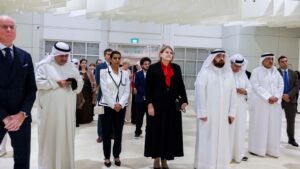
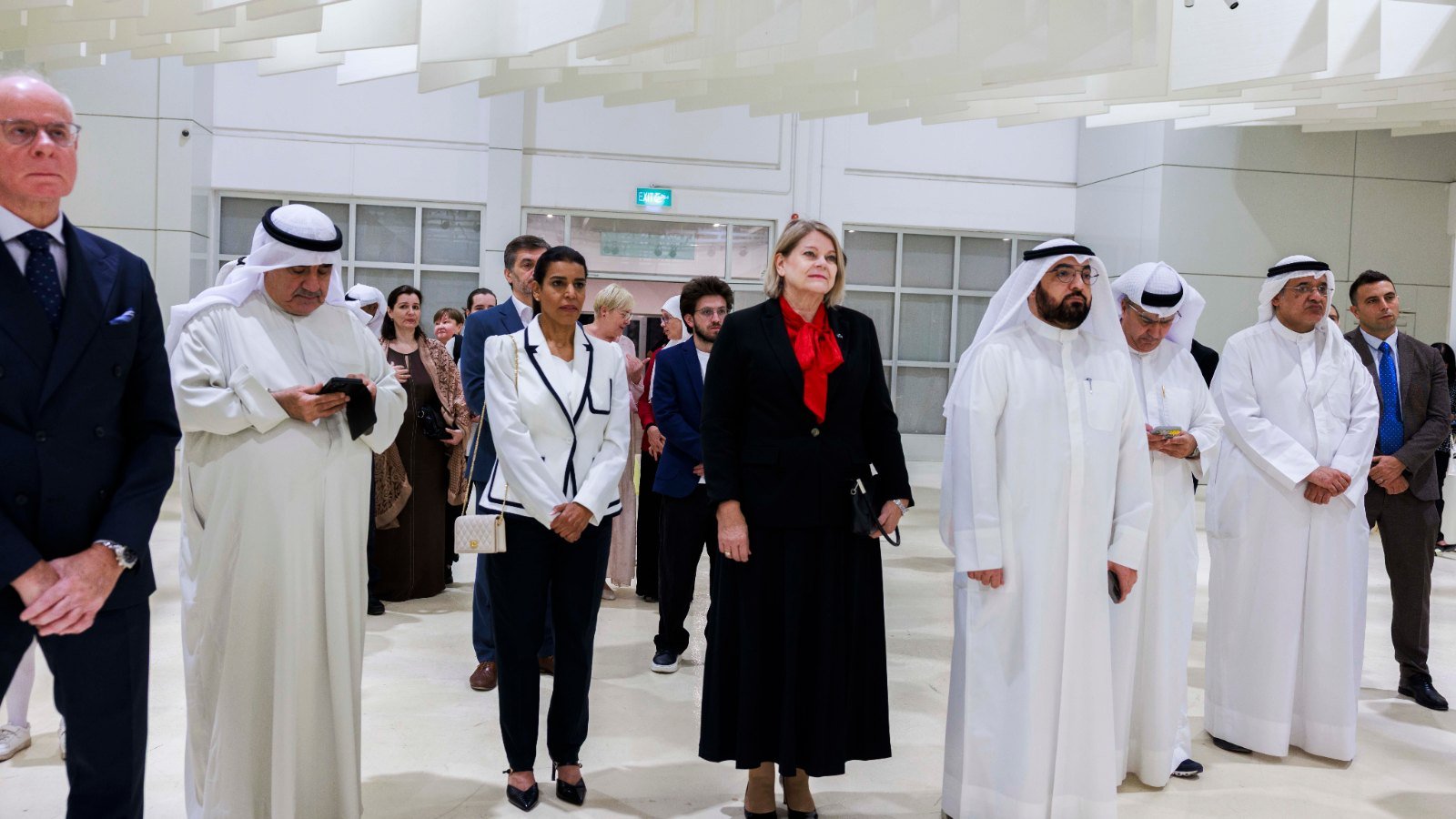
On 25 October, the Yarmouk Cultural Centre in Kuwait opened the photo exhibition “Muslim Heritage of Ukraine”, followed by a concert of Ukrainian classical music. The event, organised with the support of the Embassy of Ukraine, marked the 35th anniversary of Ukraine’s independence and 33 years of diplomatic relations between Ukraine and Kuwait. Around 250 guests attended, including officials from Kuwait’s foreign and defence ministries, foreign diplomats and members of the Ukrainian community, the embassy said.
The photographs show old mosques, madrasas and Crimean Tatar houses, including in temporarily occupied Crimea, as well as Crimean Tatar dress, cuisine and crafts. A separate part is devoted to ornek, the Crimean Tatar ornament inscribed on UNESCO’s Representative List of the Intangible Cultural Heritage of Humanity in 2021. There are also pictures from the annual iftars hosted with President Volodymyr Zelensky and Muslim clergy. The images came from photographers in Ukraine and Europe, the Crimean House, the Spiritual Administration of Muslims of Ukraine “Umma” and the personal archive of Mufti Sheikh Akhmed Tamim. According to Kuwait Times, the exhibition also features the orientalist Mykhailo Yakubovych, who produced the first complete Ukrainian translation of the meanings of the Quran from Arabic.
Kuwait’s footprint in Crimea
Opening the exhibition, Ukraine’s Ambassador to Kuwait Maksym Subkh called Muslim heritage an integral part of Ukraine’s history and culture and stressed the special place of the Crimean Tatars as an Indigenous people of Ukraine. He estimated that Ukraine has 500,000 to 600,000 Muslims, about 300,000 of them Crimean Tatars, the Kuwaiti daily Al-Rai reported.
The ambassador also recalled Kuwait’s support. In 2012, the charity committee Al-Sanabil and the Al-Rahma organisation backed the construction of a mosque in the village of Veresaieve in Crimea, and 20 Ukrainian imams attended a programme on moderation and dialogue in Kuwait. The same year, Adel Al-Fallah, then undersecretary of Kuwait’s Ministry of Awqaf and Islamic Affairs, visited Kyiv and Crimea and met Mustafa Dzhemilev and Refat Chubarov. In 2013, Kuwaiti charities helped restore the historic Al-Iman Mosque, and Kuwait’s Zakat House supported a new mosque in the village of Krasnoselske.
Subkh also spoke about the 1944 deportation of the Crimean Tatars and the pressure on Muslim communities under Russia’s occupation of Crimea. He paid tribute to Ukrainian Muslims who defend the country in the Armed Forces alongside Ukrainians of other faiths.
Lysenko, Skoryk and Bortkiewicz in Kuwait
After the opening, pianist Denys Bodnar played works by Mykola Lysenko, Yurii Shchurovskyi, Myroslav Skoryk and Sergei Bortkiewicz, joined for several pieces by clarinettist Viktor Shramko, who lives and works in Kuwait. Born in Lviv, Bodnar studied at the Lviv National Music Academy and in Wrocław, and now teaches at the Qatar Music Academy in Doha. During his visit he also gave a masterclass for students of the Kuwait Music Academy.
The evening’s partners were the state institution Dar al-Athar al-Islamiyyah, Kuwait’s National Council for Culture, Arts and Letters and the Yarmouk Cultural Centre. The embassy extended special thanks to Sheikha Hessa Al-Sabah, Director-General of Dar al-Athar al-Islamiyyah.