What unites Ukraine and the Gulf states is not a common enemy but a shared vulnerability: drones and missiles that strike ports, ships and civilian infrastructure. That was the argument made by Dr Yousuf Al Bulushi, chair of the Muscat Policy Council in Oman, at the fourth international conference “Crimea Global. Understanding Ukraine through the South” in Kyiv on 19 October.
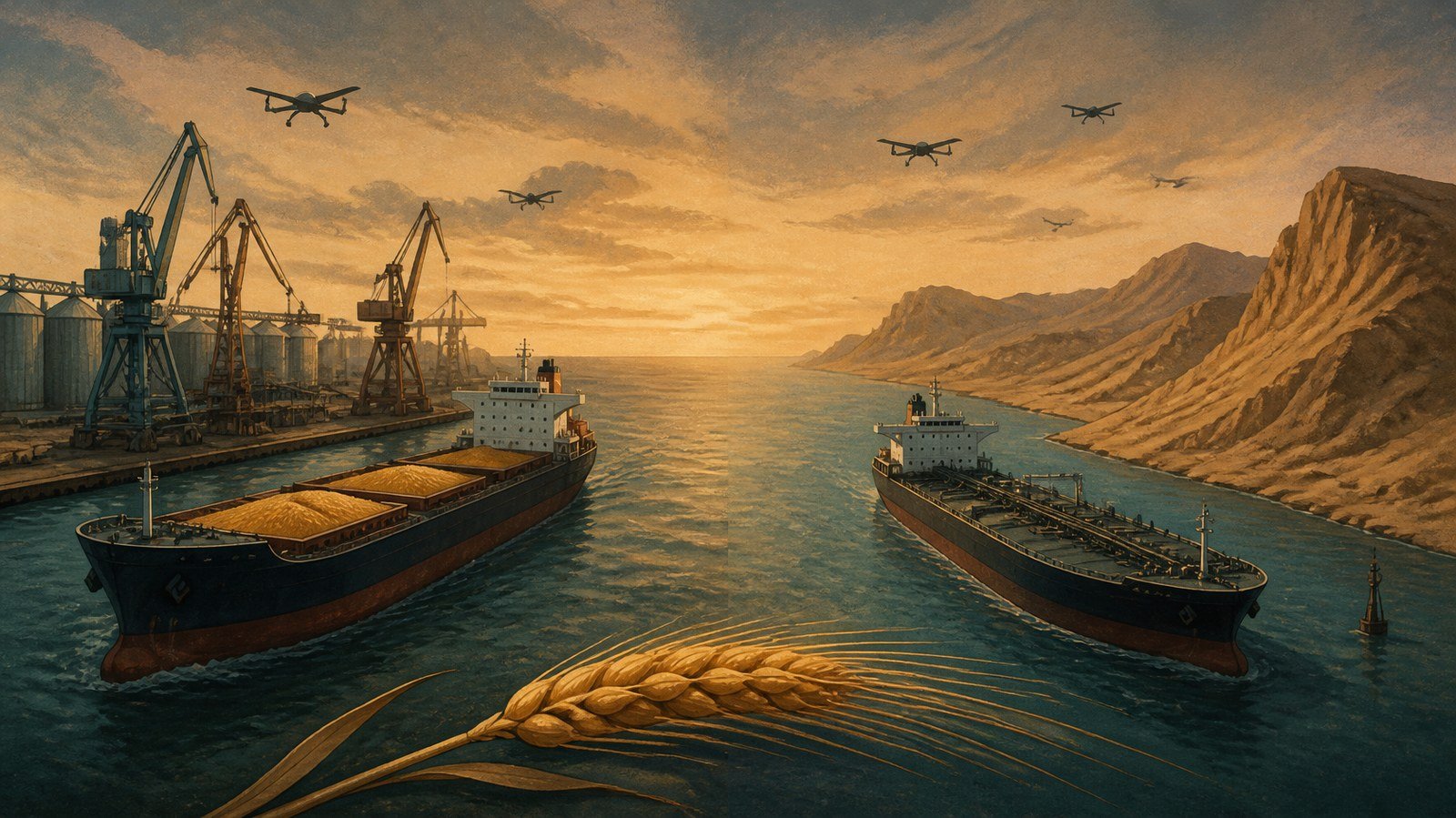
He sees the partnership as an exchange: Ukraine shares its defence experience, and the Gulf offers mediation. How closely the two regions are linked was shown at the same conference by Ukraine’s Deputy Foreign Minister Yevhen Perebyinis. Attacks on ships in the Black Sea have multiplied this year, putting at risk grain on which some 400 million people around the world depend.
“Not a common enemy, but a shared vulnerability”
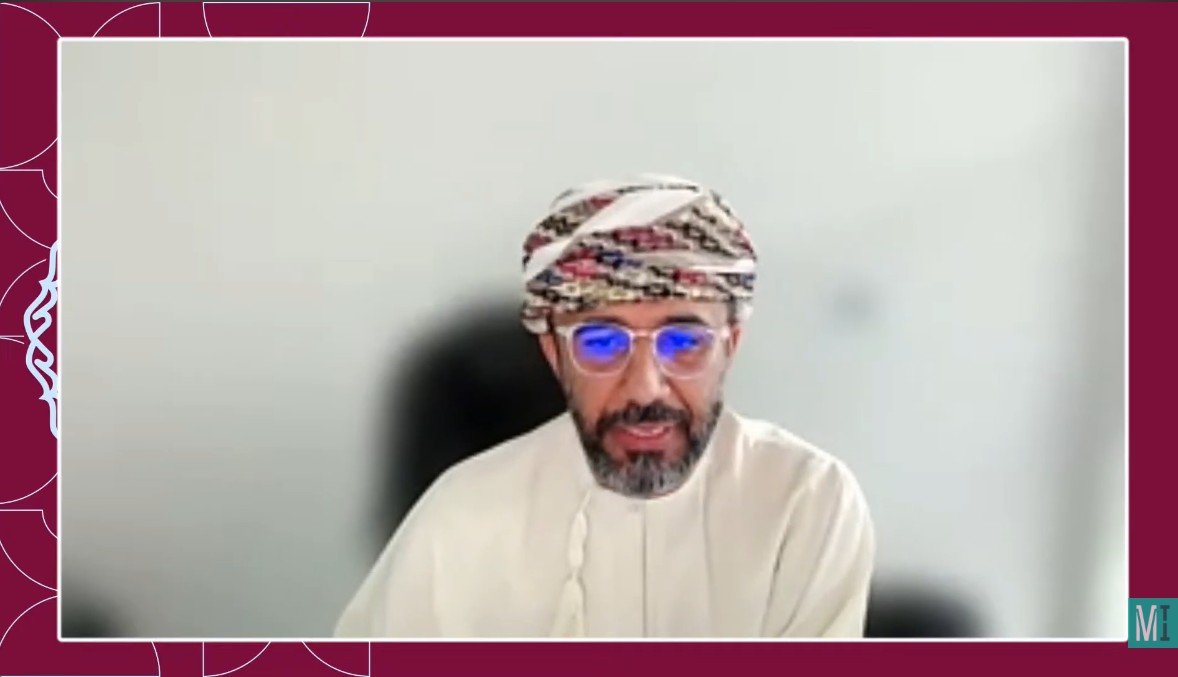
Al Bulushi joined the discussion online, saying the security situation had prevented him from travelling to Kyiv. Panel moderator Hanna Shelest asked him to speak not only for Oman but for the Gulf states as a whole. What lessons, she asked, had the region learned since this year’s war between the United States and Iran began, and was the drone agreement enough for cooperation with Ukraine?
Partnership and cooperation do not necessarily require a common enemy, Al Bulushi replied. He does not see the drone agreement as a one-off. Cooperation will continue, he said, because Ukraine now has know-how in defence, and its experience and mindset are worth learning from.
The Middle East, in turn, can offer mediation. Al Bulushi noted that Saudi Arabia, the UAE and Qatar have already helped with exchanges of prisoners of war and hostages and with the return of children. Ukraine can provide its expertise in defence and security, and the region can offer its mediation services; that, he said, could be the basis of the partnership.
What unites them, the analyst added, is not a common enemy but a shared vulnerability, because drones and missiles can be used against civilians, infrastructure, ports and ships.
From the Black Sea to Hormuz
Al Bulushi also spoke about security at sea. Current conflicts are pushing up fuel prices, he said, and food prices with them. He praised Ukraine’s success in protecting its ports and pointed to cooperation with Istanbul as an example that even countries that do not trust each other can reach agreements. On the Strait of Hormuz, he said, lessons must be drawn from the current situation and a mechanism found to resolve it, one that does not yet exist.
Perebyinis set out the Black Sea figures earlier that morning. “The security of Europe, the Black Sea region, the Middle East and North Africa is closely interconnected,” the deputy minister said at the opening of the conference. When Russia first blockaded Ukraine’s seaports in 2022, he said, world food prices immediately rose by 25%. The countries of Africa, Asia and the Middle East were hit hardest.
Shipping in the Black Sea is once again under serious threat. According to figures cited by Perebyinis:
- more than 1,000 port infrastructure facilities in Ukraine and more than 260 civilian vessels have been damaged or partly destroyed;
- 25 attacks on ships were recorded in the whole of 2025, while from June to September 2026 alone there were more than 90;
- before the full-scale war, around 90% of Ukraine’s agricultural exports went through its Black Sea ports;
- by current estimates, 11 million tonnes of grain may not reach export markets on time.
This creates additional risks for food markets, “above all in the countries of Africa, Asia and the Middle East”, Perebyinis said. He recalled the Food from Ukraine initiative, under which more than 340,000 tonnes of food have been purchased since 2022, mainly for African countries, and urged partners to work together to protect civilian shipping and port infrastructure.
Three proposals from Muscat
Al Bulushi outlined three steps that, in his view, should give the partnership substance.
The first is an exchange of experience in protection and defence between Ukraine and the Gulf states.
The second is working mechanisms, not just agreements. This means not regular meetings between individuals, he explained, but mechanisms for economic and security cooperation between the regions that would help them deal with shared vulnerabilities.
The third is a standing dialogue between Ukraine and the Gulf states to exchange ideas and proposals. Such a dialogue, Al Bulushi said, should not take place in isolation from cooperation with other countries.
Iran, Russia and an “entry point”
Shelest raised a factor that is rarely discussed openly: Russia shares weapons technology with Iran, and Ukraine knows how to fight Russia. Does that give the Gulf states an extra reason to work with Ukraine?
Al Bulushi agreed it was an important factor but cautioned against military escalation. The main goal of the region’s states, he said, is to protect their own countries. Others’ experience has to be analysed and adapted to local conditions. He also mentioned President Volodymyr Zelensky’s visits to the Gulf states after the escalation around Iran.
Later Shelest asked how Ukraine could challenge Russia’s image as a fighter against colonialism, which still carries weight in the Middle East. Russia has not always been viewed positively in the region, Al Bulushi said, and the issue is not only colonialism but also communism. Today the region itself suffers from interventions by great powers, so the Ukrainian case is understood there: countries in the region face similar threats.
The analyst called the drone agreement an “entry point” for gradually changing perceptions. Even in countries that had economic or energy partnerships with Russia, the context is shifting because of the conflict with Iran. Many Gulf states see that Russia supports Iran, he said, and this works in Ukraine’s favour.
At the same time, Al Bulushi named a factor that, in his words, is unlikely to help Ukraine: its position on Israel and how that position is perceived in the region. Ukraine’s support for Israel, he said, is a difficult point there.
Background
The war began on 28 February 2026 with US and Israeli strikes on Iran. Iran retaliated against Gulf states as well, including with drones, AFP and The New Arab reported.
Before the war, a fifth of the world’s oil passed through the Strait of Hormuz. By early September, according to Reuters, Iran had largely choked off transit, and Brent crude rose above $100 a barrel for the first time since July, gCaptain reported.
The FAO Food Price Index stood at 136 points in September 2026, up 5.8% on a year earlier. FAO Chief Economist Maximo Torero linked the rise to disruptions in the Strait of Hormuz and the Black Sea, as well as to climate shocks, MercoPress reported.
In late March 2026, Volodymyr Zelensky visited Saudi Arabia, Qatar and the UAE. Ukraine signed an air defence agreement with Saudi Arabia and a defence agreement with Qatar on countering missile and drone threats; according to Zelensky, both run for 10 years. Ukraine and the UAE agreed to cooperate on security and defence. Ukraine sent anti-drone specialists to all three countries, The New Arab reported.
About the conference
The fourth international conference “Crimea Global. Understanding Ukraine through the South” was held in Kyiv on 19 October 2026 under the slogan “Navigating a World of Great Powers”. It was organised by the Mission of the President of Ukraine in the Autonomous Republic of Crimea / Office of the Crimea Platform, the ZMINA Human Rights Centre and the Media Initiative for Human Rights. Partners were Ukraine’s Ministry of Foreign Affairs, the Ukrainian Institute and the Centre for Transatlantic Dialogue.
The panel “Know-How à la Kyiv: Ukraine as a Provider of Security and Resilience Expertise” was moderated by Dr Hanna Shelest, Security Studies Program Director at the Foreign Policy Council “Ukrainian Prism”. Yousuf Al Bulushi took part online; his remarks are reported from the Ukrainian simultaneous interpretation broadcast during the conference. Yevhen Perebyinis spoke in Ukrainian; his quotes were translated by Qahwa.Media. The full recording is available on YouTube.